
The Supreme Court on Sunday issued a notice to the Centre and passed several directions regarding metro and train services, internet access, and peaceful assembly in Delhi, following a plea for contempt proceedings over alleged violations during the CJP protest. The court emphasised the protection of fundamental rights and the need for lawful conduct during protests.

The Supreme Court stated it is not inclined to completely ban firecrackers but emphasised the need for authorities to implement existing orders on the ground to combat air pollution in Delhi-NCR. The court highlighted that annual orders become a "mockery" without proper enforcement and urged serious action, public awareness campaigns, and on-ground officer presence. It also noted ongoing consultations regarding the use of Barium in firecrackers and discussed measures taken by the Delhi government and CAQM to tackle pollution, including curbs on vehicles and construction. The court reiterated its stance of finding a middle ground rather than a complete ban or round-the-clock fireworks.

Union Home Secretary Govind Mohan has tendered an unconditional apology to the Supreme Court for imposing restrictions in Delhi ahead of an October 10 protest, stating there was no deliberate non-compliance with the court's order. The Centre's communication was aimed at maintaining peace and preventing public order disturbances, citing a protest allegedly planned without permission and past experiences.

The Supreme Court has overturned the Indian Navy Selection Board's decision to deny Permanent Commission to a woman officer in the Judge Advocate General Branch. The court found that the board failed to properly consider her favourable Annual Confidential Reports and unduly focused on past non-recommendations. The Navy has been directed to reconsider her claim within six weeks.

A contempt petition has been filed in the Supreme Court against Union Home Secretary Govind Mohan, Delhi Police Commissioner Anurag Kumar, and DMRC chairperson D Thara. The plea alleges that authorities violated the apex court's October 9 order by imposing a "blanket shutdown" on metro and train services in Delhi on October 10, despite the court's directive for only regulated movement during a protest by the Cockroach Janta Party (CJP). The petitioner claims personal experience of metro station closures and seeks immediate revocation of prohibitory orders.

The Supreme Court has granted the Centre an extension until October 15 to file its response on petitions concerning the closure of metro stations and disruption of train services in Delhi during protests against Chief Election Commissioner Gyanesh Kumar and the Special Intensive Revision of electoral rolls. The court also deferred a crucial hearing, issued notice on a petition challenging the immunity of election commissioners, and sought a Delhi Police officer's presence regarding alleged assaults on women journalists. Earlier, the court had directed authorities to ensure normal public transport and prevent unlawful detentions.

The Supreme Court is scheduled to hear a plea on Sunday seeking contempt proceedings against authorities for allegedly violating its directive against a complete prohibition on metro and train services in Delhi during the CJP protest. The plea argues that the blanket shutdown and lack of transparent advisories constitute a deliberate disregard for the court's October 9 order, which had called for regulation rather than outright prohibition of public transport.
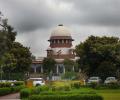
The Supreme Court clarified that it was not taking cognisance of media reports suggesting government authorities tendered unconditional apologies in contempt proceedings related to restrictions during an October 10 protest. Solicitor General Tushar Mehta explained that apologies are procedural, and authorities have defended their actions, citing reasons like maintaining public order and intelligence inputs. The court emphasised that media coverage was not relevant to its proceedings.

The Supreme Court on Sunday directed that people gathering peacefully should not be illegally detained and issued a notice to the Centre regarding alleged violations of its earlier order during a CJP protest in Delhi. The court also asked the Solicitor General to ensure normal metro services and no internet disruption, while addressing concerns about widespread detentions and transport closures.

The Supreme Court has upheld the Bombay High Court's decision to quash the Yes Bank administrator's write-off of Rs 8,415 crore worth of Additional Tier 1 (AT-1) bonds, criticising the RBI and Yes Bank's conduct.

The Supreme Court has strongly criticised the exorbitant markup on cancer drugs by hospitals, calling it "carnage" and "broad daylight dacoity." The court highlighted a case where a cancer drug was marked up ten times its retail price and urged the Centre to implement a uniform 16% margin on all medicines. It also raised concerns about hospitals forcing patients to buy medicines from their in-house chemists.
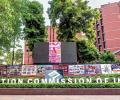
Defending the law for regulating appointment procedures of the chief election commissioner and the deputies, the Centre on Thursday told the Supreme Court that it would be wrong to assume that the prime minister and the other ministers would act in "bad faith" and against "democracy" because they have a numerical majority in the selection procedure.

The Centre on Tuesday told the Supreme Court that it has constituted a high-powered committee headed by the director general of health services (DGHS) to formulate a mechanism for conducting a comprehensive audit of the existing system of admission through the NEET-PG examination.

The Supreme Court of India has quashed criminal proceedings against Standard Chartered Bank and one of its officers in a 1991-92 Foreign Exchange Regulation Act (FERA) case, citing an extraordinary 23-year delay in prosecution and the Enforcement Directorate's failure to comply with mandatory procedural safeguards.

The Supreme Court has agreed to examine Sebi's challenge to a Securities Appellate Tribunal (SAT) decision that cleared Wadia Group Chairman Nusli Wadia, Bombay Dyeing, and others of allegations of fraudulent financial reporting.

The Supreme Court has directed the Centre to rationalise airfares and provide relief to flyers, highlighting discrepancies in pricing for the same routes and airlines. The court is addressing a plea seeking a robust regulator to ensure transparency and passenger protection in the civil aviation sector.
The Supreme Court of India has ruled that voluntary retirement is a distinct right of employees upon completion of the required years of service, clarifying the process and employer obligations.

The Supreme Court of India has ruled that stem cell therapies for Autism Spectrum Disorder (ASD) can only be offered within approved and monitored clinical trial settings, deeming any other use unethical and potentially malpractice.

A bench of Justices Vikram Nath and Sandeep Mehta termed the exorbitant rise of airfares by airlines as "exploitation" and asked the Centre and the Directorate General of Civil Aviation (DGCA) to file their replies to a PIL seeking binding regulatory guidelines to control the unpredictable fluctuations in airfare and ancillary charges imposed by private airlines in India.

The new UGC regulations mandating all higher education institutions to form "equity committees" to look into discrimination complaints and promote equity were notified on January 13.
The Supreme Court of India has imposed a fine of Rs 10 crore each on 10 private dental colleges in Rajasthan for irregularities in admissions, citing blatant illegality and willful violation of rules. The court also directed the state government to deposit Rs 10 lakh for failing to adhere to legal procedures.

The Delhi High Court agreed to hear a plea regarding mass flight cancellations by IndiGo, while the Supreme Court acknowledged the chaos as a 'serious matter'. IndiGo has cancelled 500 flights, leaving many passengers stranded.

The Supreme Court of India is considering formulating pan-India guidelines to prevent road accidents on expressways and national highways, following a fatal accident in Rajasthan. The court is focusing on the issue of illegal 'dhabas' and encroachments along highways as potential causes of accidents.

Meanwhile, the Uttar Pradesh government has suspended Bareilly City Magistrate Alankar Agnihotri on charges of indiscipline after he resigned from service in protest against government policies.

The bench said, given the pressing nature of the crisis, particularly in cities like Kota, Jaipur, Sikar, Vishakhapatnam, Hyderabad, and Delhi, where students migrate in large numbers, immediate interim safeguards are the call of the day.

As outrage mounted over the death of a 19-year-old Dalit student, the Himachal Pradesh government on Saturday suspended an assistant professor booked on charges of sexually harassing her and announced an inquiry into allegations, including those of ragging and cast related abuse of the victim, while the University Grants Commission also set up a fact-finding committee.

The Supreme Court of India has formed a Special Investigation Team (SIT) to investigate allegations of non-compliance with laws and irregularities at Vantara, a Green Zoological Rescue and Rehabilitation Centre in Gujarat. The SIT will examine the acquisition of animals, compliance with wildlife protection laws, and other related issues.

The Supreme Court of India has ordered the Union government to grant a permanent commission to a woman officer in the Army Dental Corps who was denied benefits given to similarly placed officers. The court ruled that the woman officer was wrongly excluded from consideration and that the principle of "what is sauce for the goose ought to be sauce for the gander" applies in this case. The court directed the government to implement the order within four weeks and to extend all consequential benefits, including seniority, promotion, and monetary benefits, to the officer.
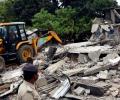
The Supreme Court on Wednesday issued pan-India guidelines on demolition of properties and said affected people need to be given some time to challenge demolition orders before an appropriate forum.

Equating 'bulldozer justice' with a lawless state of affairs where might is right, the Supreme Court on Wednesday laid down pan-India guidelines and said no property should be demolished without a prior show cause notice and the affected must be given 15 days to respond.

Besides the Ministry of Information and Broadcasting, a bench of Chief Justice S A Bobde and Justices A S Bopanna and V Ramasubramanian also issued notices to the News Broadcasters Association, the News Broadcasting Standards Authority of India and the Press Council of India on the PIL filed by Delhi-based lawyer Reepak Kansal.

The Supreme Court on Monday took suo motu cognisance of the deaths of three civil services aspirants in the basement of a coaching centre in New Delhi and sought responses from the Centre and the Delhi government.

Issuing a slew of directions, a bench of Justices S Ravindra Bhat (since retired) and Aravind Kumar asked the central and state governments to pay Rs 30 lakh as compensation to the next of kin of those who die while cleaning sewers.

Directing the Centre, states and Union Territories (UTs) to ensure the queer community is not discriminated against, the CJI, who is heading the constitution bench, said queer is a natural phenomenon known for ages and is neither urban nor elitist.

The National Stock Exchange (NSE) has received Rs 300 crore from the Securities and Exchange Board of India (Sebi) following relief from the Supreme Court (SC), which is hearing an appeal by the market regulator in the colocation case. The court on March 20 asked Sebi to return Rs 300 crore to the NSE from the Rs 1,107 crore the exchange had deposited as part of the disgorgement in the case. The NSE had given an undertaking that it will return the entire amount to Sebi if the latter wins its appeal before the SC.

The India Meteorological Department on Friday predicted that Delhi will likely receive light to moderate rain accompanied by thunderstorms for the next 4-5 days.

Observing that it always felt pre-censorship was impermissible, the Supreme Court on Thursday wondered how there can be a pre-screening committee for web series, films or other programmes which are directly released on online platforms.

The apex court's five-judge Constitution bench headed by Chief Justice Dipak Misra said Aadhaar is meant to help benefits reach the marginalised sections of the society and takes into account the dignity of people not only from personal but also from community point of view.

"I am personally averse to sealed covers. There has to be transparency in court... This is about implementing orders. What can be secret here," the CJI said.

The plea, filed through advocate Vivek Narayan Sharma, had said that the public interest litigation was necessitated due to the alleged failure of the Centre in carrying out its constitutional duty and responsibility to protect the rights to privacy and freedom of speech and expression of the citizens of India.
